
Loading cart contents...
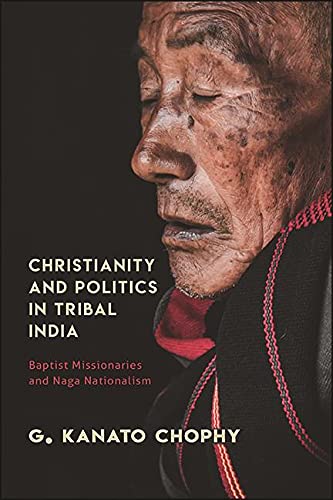
Christianity and Politics in Tribal India: Baptist Missionaries and Naga Nationalism
$95.00
Description
Through an ethnohistorical study of the Nagas–a congeries of tribes inhabiting the Indo-Myanmar frontier–this book explores an unusually interesting region of India that is all too often seen as peripheral. G. Kanato Chophy provides a distinct vantage point for understanding the Nagas in relation to colonialism, missionary encounters, identity politics, and cultural change, all seamlessly woven around American Baptist mission history in this region. The book also analyses India’s cacophonous postindependence democracy in order to delineate multifaith issues, multiculturalism, and ethnicity-based political movements.
Within the West, episodic memories of the Great Awakening, a significant landmark in the history of Protestantism, have faded into archival records. But among the Nagas of the Indo-Myanmar highlands, Baptist Christianity persists as the dominant religion, influencing the daily lives of nearly three million people. Focusing variously on evangelical faith, missionary zeal, ethnic identities, political struggle, and complex culture wars, Christianity and Politics in Tribal India is an original and major study of how Protestant missions changed the history and destiny of a tribal community in one of the unlikeliest regions of South Asia.
Read the book review here:
Review: Christianity and Politics in Tribal India; Baptist Missionaries and Naga Nationalism
You must be logged in to post a review.
Related products
-
![]()
-
![]() $58.80
$58.80 -
![]() $29.99
$29.99 -
![]()
-
![]()
-
![]()




Reviews
There are no reviews yet.