Description
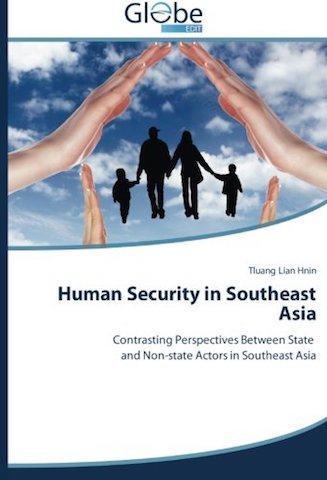
This work examines different security discourses in contemporary Southeast Asia, and analyzes the human security norm in the region. As opposed to the state-centric security approach, human security focuses on ‘human-centred’ approach as a paradigm shift. The book argues that comprehensive security is not adequate in addressing the real essence of human security. The book particularly explores how and why state and non-state actors respond to this new emerging norm of human security and ASEAN and Myanmar are taken as case studies as state actors, and ASEAN People’s Assembly as non-state actor reflecting different responses. Particularly, it is human rights issue where contrasting perspectives are usually exposed. The book also analyses the debates about universalism and cultural relativism from human security perspectives. The book concludes that while human rights should be taken into account and looked at from specific cultural and historical backgrounds, ‘Asian values’ should not be extremely used as a justification for human rights violations. At the same time, human rights should not be exclusively politicized which might hinder the pursuit of human security in Southeast Asia.
Additional information
| Format | |
|---|---|
| Language | |
| Year Published | |
| Author |
You must be logged in to post a review.
Related products
-
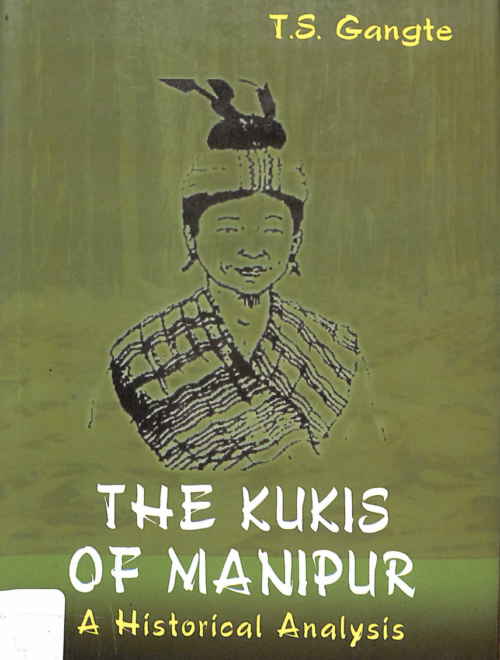
The field study inprints an analyses certain aspects of socio-cultural life of Kukis, their issues of identity in comparison with other tribal clans, militancy and its root with ample mastery and exhaustively from an inter-disciplinary position, with reference to language, geography, colonial history propinquity and the like.
-
This book is a comprehensive political study of the South China Sea (SCS) disputes. With over US $5 trillion worth of trade passing through it every year and a history of military flashpoints, the SCS is invariably a hotbed of great power rivalry. This book: Traces the history of the disputes from the 19th century until recent developments; Examines recent arbitrations including the ruling on the case filed by the Philippines at the Permanent Court of Arbitration (PCA) at the Hague, the Netherlands; Studies these disputes in a theoretical framework, utilising international relations theories, particularly realism, liberalism and constructivism. Explores how the ASEAN states approach the SCS disputes, and analyses dispute settlement under international law. Drawing on extensive fieldwork and interviews with experts and those directly involved with the disputes, this book is indispensable for students and researchers of maritime studies, security studies, politics and international relations, geopolitics and Asian studies.
-
ZO History, Mizo, Kuki, The Chin. The Becaming of ZO, The primary Wars and crises, The Traditions, Religion and General Environ. Zo people believe they settled in the Chindwin Valley in early times. They know the Chindwin River by different names the Lusei as Run, Meaning River, and the Paihte as Tuikang, meaning white water. Pu K. Zawla in his "Mizo Pi Pu to Ieh an Thlahte Chanchin" suggested. as the year in which Zo people arrived in the Chindwin Valley, and he oelieves that they lived there two or three centuries. The rise of the Tang dynasty brought contact between early Zo people in the Chindwin and the Tang Chinese. The Tang, as widely traveled traders, recorded the existence of three kingdoms in Burma the Pyus, the Pegus (Mon), and the Sak. The Sak kingdom may have been the Zo of upper Burma


Reviews
There are no reviews yet.